

The cult of acting classes.
Turns out, I was looking for permission.

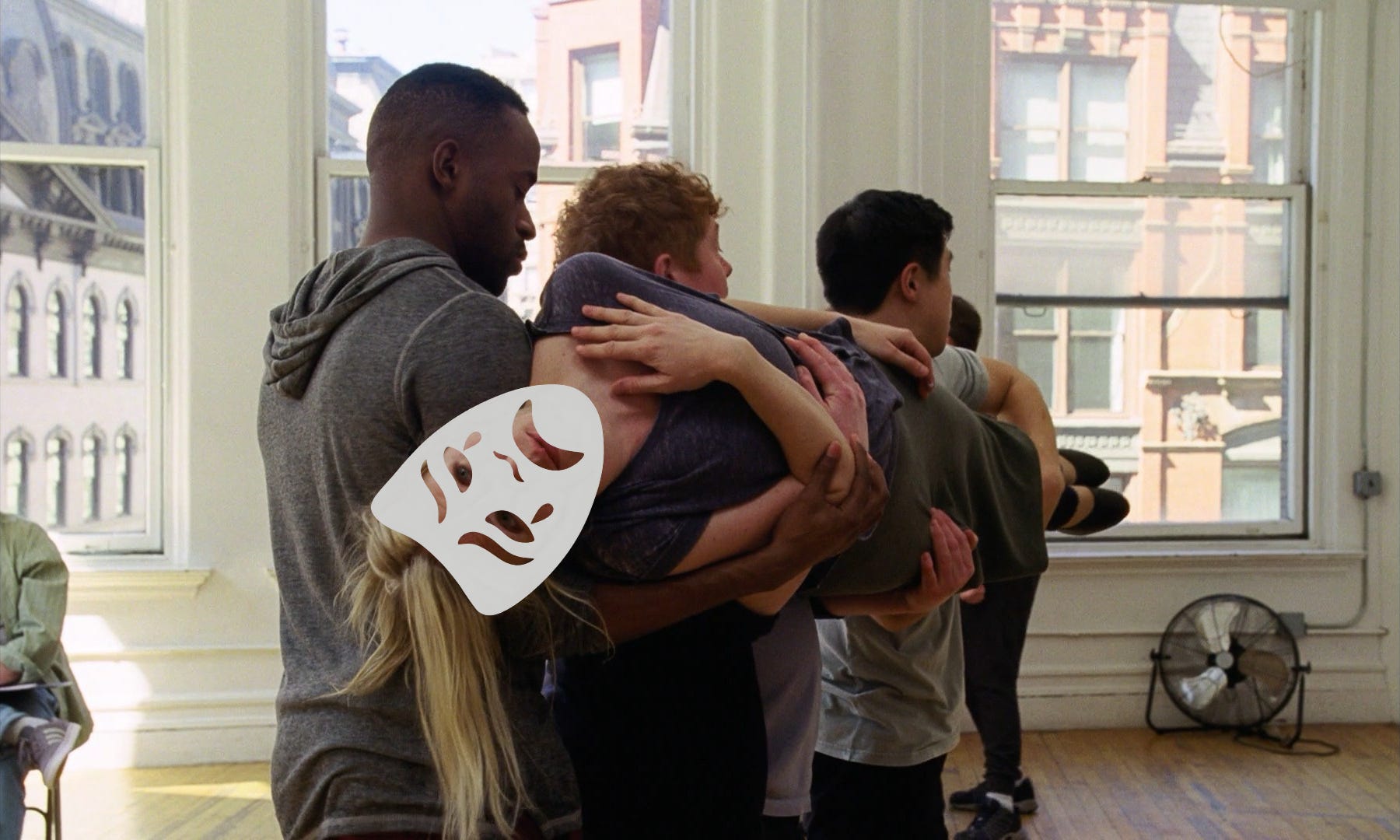
One of my biggest insecurities as an actor is that I am not formally educated.
I oscillate between ;
feeling inferior that I don’t have the stamp from a prestigious studio who has conditioned
my bodymy instrument, and;feeling superior that I haven’t succumbed and bought into the cult that is Acting Training.
Neither belief is healthy or particularly good for my craft—and neither are entirely true, either.
I have, in fact, taken dozens of classes and attended a six-month acting conservatory (as the very first Indigenous person who went through their program, I didn’t have a great experience, so I won’t be giving them a public shoutout). I’ve picked and chosen my own education; classes here, intensives there, private lessons and lots of curiosity-driven learning.
But still; I didn’t attend Juilliard, the Yale School of Drama, NYU’s Tisch School of the Arts or the National Theatre School of Canada. And I feel that makes me an imposter—not actually a Real Actor.
Friends who have gone to these establishments tell me I’m lucky. That I didn’t have my internal magic ability beaten out of me, that I hadn’t been molded into the shape of a “good white actor.”
And I do feel lucky for that. I still feel connected to my own inner artist’s voice and perspective.
I also feel lucky to have narrowly escaped an acting class that began to resemble something more sinister.
A Mohawk in Manhattan
I landed in New York City at twenty years old, fresh out of my teens, straight off the rez and shortly following my TIFF breakout film, Rhymes for Young Ghouls. I hadn’t attended theatre school, but was excited to dive into the industry, drawing inspiration from my education and fieldwork in corrections, where I’d witnessed real-life drama.
I’d also signed with a management company, who took me on after that debut leading role. Nearly instantly upon signing, I’d come razor-close to major roles that would’ve changed the course of my life forever.
I’d auditioned and met with JJ Abrams in Los Angeles for the leading role in his much-anticipated Force Awakens film—but lost out. I was “in the mix” for Pan; the Tiger Lily role that controversially went to Rooney Mara, and I’d been cast in X-Men, not once, but twice; as Jubilee in Days of Future Past (in hindsight, a role I should’ve never been considered for), and as Dani Moonstar in the ill-fated Gambit film. Neither ever culminated, and slowly but surely, all potential prospects dissipated until I was utterly broke, unemployed and fighting for entry-level roles.
Despite receiving positive feedback from casting directors and getting close so many times, my managers didn’t receive it as a positive sign. Instead, they told me that it must’ve been my fault; that I was too green, that whatever natural talent I had didn’t matter because I didn’t know the fundamentals of acting.
Now, I can’t say they were entirely wrong. I have enough self-awareness to know that I was green, that I did have more I needed to learn. But their delivery to a young, eager, impressionable actor was less-than-tactful. And it tore me apart. As someone who, at the time, placed precisely all of my self worth in my talent and employment, I felt utterly worthless.
But they offered a clear solution. They had attended this specific Acting Teacher’s final showcase from his graduating class of 2013 and concluded it was the strongest of all the New York conservatory showcases they’d seen that year. Also—one of their rising clients was a devout follower of this Acting Teacher’s methods (would I sound salty if I mentioned that she’s no longer repped by that company?). To say they recommended this class was an understatement—it felt more like a demand, a threat on if I wanted to continue being represented by them.
Sign me the fuck up, I thought. I was willing to do whatever it took to be back in the good graces of these Hollywood castings directors, and to prove to my managers that I had what it took to be a Real Actor.
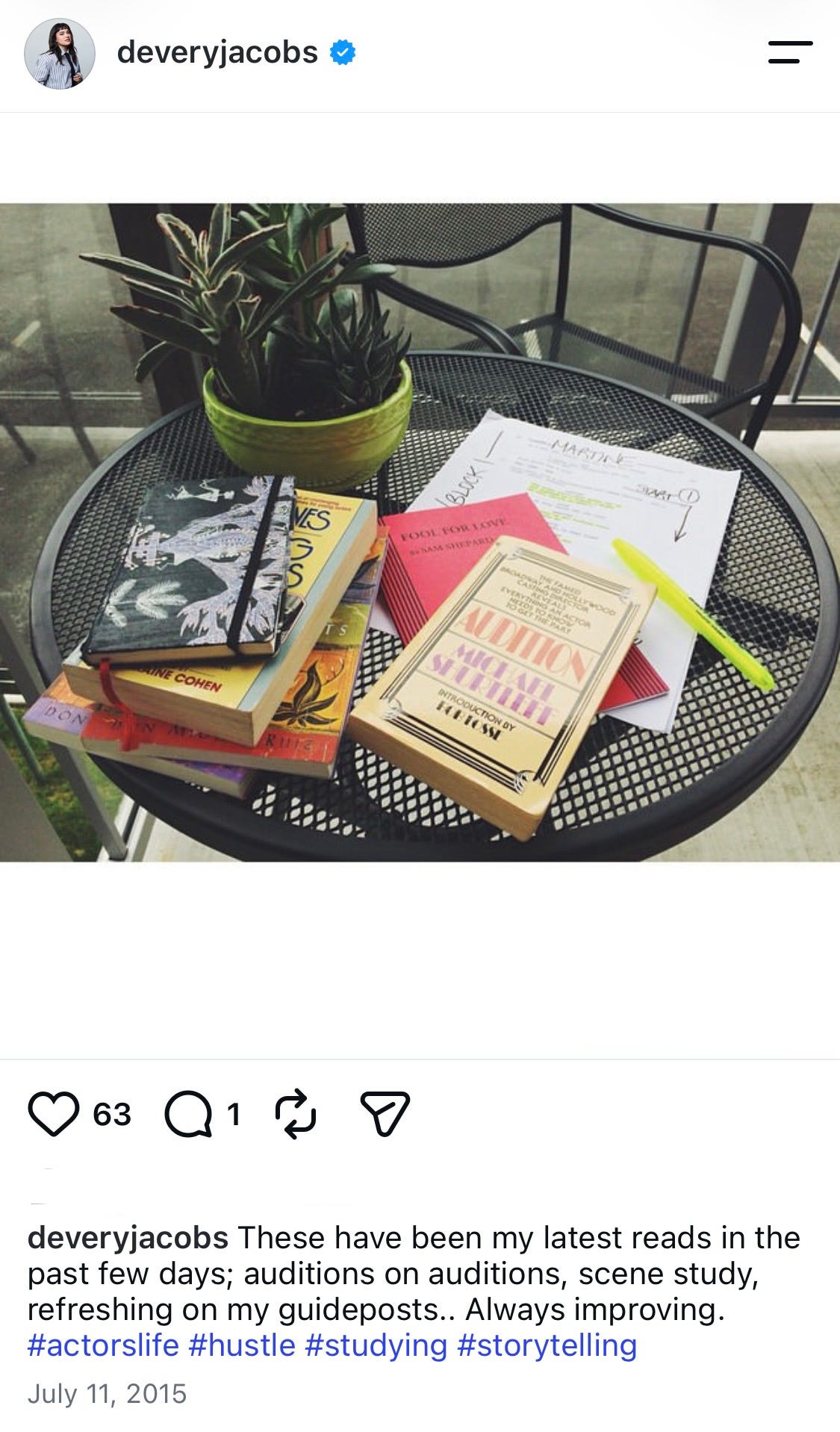
Thus, I signed up for this Acting Teacher’s Studio, which was the weekly counterpart to his Official Conservatory.
The Cult Acting Studio
Into a Midtown theatre I entered, where he wasn’t seated in the audience with the rest of the class, but perched upon a director’s chair in the spotlight, beside the performing actors laying their guts and insecurities out on stage. It was there that the Acting Teacher would critique (and sometimes eviscerate or publicly humiliate) actors, who were desperately seeking his approval.
He’d recite phrases, which, by their intonation, one could assume he’d touted thousands of times. And in specific places, he’d pause for dramatic effect, indicating to the class that it was their time to chime in, to repeat his mantras and finish his sentence. I’ve never been a church-goer, but it felt reminiscent of that; sitting in a pew, hearing everyone speak out in unison—these memorized passages that left me sitting there dumbly, out of the loop.
During bathroom and snack breaks, actors would form a winding line down the theatre’s rows just for the chance to speak to this Acting Teacher. Limbs splayed out and draped across his director’s chair, he would allot 2-3 minutes per actor, to say hi, to offer individual insight on a problem, or to extend a coveted hug. It all felt like being blessed by a guru.
Fortunately for me, I am allergic to organized religion. Something about being Mohawk and our (learned) mass skepticism and distrust of outsiders, protected me in this period. I made a vow to cherry pick from my experiences; to learn what was helpful, to leave what was harmful, and to keep record of my time at this Studio.
And there were some interesting lessons out of the place. I was introduced to voice-training that focuses on breath support and resonance. Something I was, and still am, not very skilled at. And I learned of techniques to make a scene feel more dynamic and layered. But I didn’t love the ways in which everyone’s work began to assume the same tone, the same voice, the same taste.
The Acting Teacher had his favourites. Oftentimes, they were white or very light-skin, and strapping if they were men, and frighteningly thin if they were women. All heterosexual. Whether they actually booked roles didn’t determine his preference, but it was how faithfully they followed his methods that proved to be the indicator.
Now, a lot of what I’m describing isn’t abnormal for acting classes. These spaces can often be outlandish, with bizarre hierarchies, dizzying insecurity, comical practices and usually operated by aging white women in flowy kaftans.
Actors are regarded—and dismissed—as kindergarteners who are encouraged to free their inner child and to play and explore with abandon.
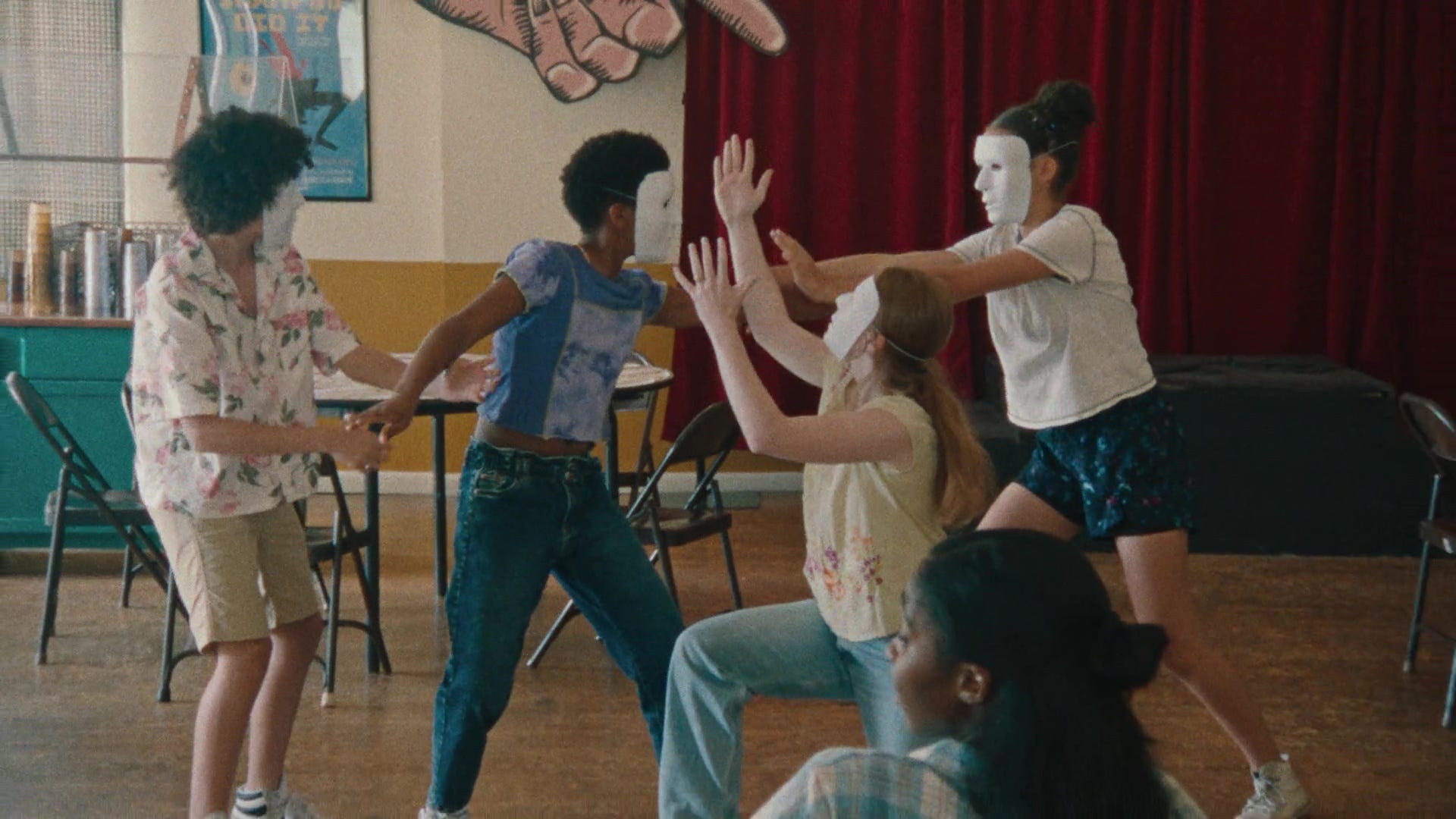
But there’s an especially vulnerable component to actors. It is an art form that requires emotional openness and vulnerability, and an inherent trust in authority figures who will guide their performances, their emotions—who will provide them with their livelihood.
From my experience, most actors are also people pleasers. Myself included.
Just as many others socialized as women, I was raised with the overwhelming feeling that I was responsible for, and required to manage the feelings of everyone around me. But my first experiences with acting blew that wide open. I was able to wield my own emotions, big or small, in the safe confines of a scene. Acting provided me a container that allowed for emotional release, without risk or consequence in my real life.
Yet outside of those safe confines, I wanted to do a good job. To be the best actor, the best gymnast, the best student. To be a “good girl.”
It is that quality that makes actors so vulnerable and susceptible to harm at the hands of teachers. Actors may be looking for fame and success, sure. But more earnestly—for validation and affirmation that they are talented and worthy.
And who better to turn to than an acting guru, who claims to have all the answers to the life, success and love that they covet?
When you’re in the business of feeling, mining your personal life, your history, your very psyche, to produce “good work,” is a very slippery slope.
Every performer I know has experiences with cult-adjacent spaces. The Cut wrote a damning and fascinating report on the Toronto-based Lonsdale Smith & Company acting studio—a space I’ve heard whispers about from the time I moved to the city. I’ve heard gut-wrenching rumours of other classes where a student with a debilitating eating disorder was forced to vomit publicly on stage to “be more open, more raw, more truthful.” And I have friends who were invited into the disgraced “leadership training” group NXIVM, which was disproportionately made up of—you guessed it—actors.
If you’d like to read more, this Reddit thread and this Hollywood Reporter exposé chronicle accounts of cultish classes.
Canine Carcinoma
In my own Acting Teacher’s class, things began to sour once his dog developed cancer.
He made a point of sharing the story in class of how he is incredibly in-touch with himself, so much so, that he is attuned to the bodies of everyone around him, from actors to his beloved German shepherds. And with this superpower he possessed, he was able to tell that something was off with his dog. (Which if you’re a dog-owner, you’ll know something’s up with your pooch). But not just emotionally. When holding his dog and sensing its body, he was able to detect that his dog was sick—with cancer, specifically.
This all looped back to his lesson, that we, as artists, need to be as connected to our bodies as he, that we should be able to sense cancer in our own bodies, and a failure to be that connected is a failure to our craft.
I don’t need to elaborate on why I think this is utter horseshit.
Following the puppy cancer fiasco, I had noticed that numerous classmates, specifically ones who were enrolled in the conservatory, were coupled up and many had actually gotten married during their studies. Oddly, the majority of the students in this program were Canadians, who flocked to New York to pursue their dreams and landed in this teacher’s two-year program.
“You’re dual citizen?” asked my Quebecois classmate, after learning that I had working-status in the US. “No,” I clarified, “there’s something called Jay Treaty, which means, because I’m Indigenous and my nation spans both sides of the border, I have my social security here as well.”
“Oh,” he muttered. “Well, would you consider marrying me? I would cover everything, we’d just have to keep it up for show on social media. It would mean that I’d gain working status here too, right?”
“Uh… It doesn’t really work like that.”
This was how I learned that students were being instructed and encouraged by the Teacher to arrange green-card marriages between American and Canadian cohorts, as a means to stay in the country.
Some were luckier and married for love. Others have been wrapped up in legal issues for the better part of a decade. I don’t know if any were deported or charged for these sham unions, but none of it passed the smell test for me.
After finally having enough of broke, depressed New Yorkdom, I made the decision to head back to my rez to emotionally and financially recover from my first time living away. But the Acting Teacher had caught wind of the roles I’d been up for, and my success on the Canadian side with my film Rhymes. I’d slowly slid into a Potential Favourite slot of his, and he made me an extraordinary offer.
He told me he saw potential in me, and that he knew I was going to blow up and make it big one day. And he offered me a deferred tuition for his two-year conservatory starting in the upcoming season.
“I know you’ll book big projects, and then you can pay me back whenever you make the money. I know you’ll be good for it.”
His words were a salve to my shattered ego, and I felt so affirmed by this generous offer. He believed in me. He saw for me, what I envisioned for myself. But I was also incredibly torn; I genuinely needed to recoup at home, in community around other Mohawk people. I told him I would seriously consider the scholarship and get back to him after thinking it over.
Nearly as soon as I received the proposition, my phone rang with a call from his pushy student-turned-wife that was thirty years his junior (the red flags were flying high). She’d heard the news that I was interested and was calling to enrol me in the approaching semester. Except this time, she was trying to sign me up for a payment plan.
I was confused. I explained how the Acting Teacher waived my fee, allowing me to defer, but she pressed on, as though oblivious to his verbal promises. I expressed my concerns, that I was so frayed from my time in the city and that I was in piling debt.
“What debt? How much do you owe?”
She wasn’t taking no for an answer and pried for intimate details about my financial situation. Rather, she offered ways I could get loans to cover tuition. After all, the Teacher believed in me.
What should’ve hit me sooner all monsooned in that very moment. This was their fucking schtick! He was the artist-guru who made lofty promises, and she was the bulldog to muscle over the cash.
At that, I hung up, blocked their number, and never attended a class again.
Shortly following, I was dropped by my managers in New York City. They told me I clearly wasn’t committed to the craft and that they couldn’t continue to work in a vacuum.
I was broke, without American reps and back on my rez. I was incredibly hurt, but managed to recognize my luck; at least I was out of that situation. It could have been worse—so much worse. My encounter was just the tip of a thousand-league-deep iceberg. My Mohawk ass got itself out of there as soon as I could, which not all of my counterparts could say. Not at least for many years later.
I made grieving peace with the fact that I would never attend another acting studio, and that I’d missed my big moment. From there on out, any work I’d do would have to be for myself rather than for a big Hollywood outcome.
It also was around that time that I began writing.
Oddly enough, it was when I leaned into my voice as a writer, that I was able to shift my energy from seeking approval from authority figures, to emboldening myself in my own creativity. I was no longer waiting around to be granted permission to work in my art form, hoping to be chosen.
Auditions begun to hold way less pressure; if I didn’t book the job—great! It meant I’d have time to adjust my dialogue in scene 12.
I’m positive that the dank scent of desperation dissipated from me the moment I picked up a pen. I could satisfy myself creatively, all on my own.
Writing didn’t ask me who I needed to impress, but demanded to know what I needed to say. Creating ended up being my biggest lesson in artistry. It ultimately made me a better actor.
Classes Afresh
Despite my vow, I did eventually take more acting classes.
As time passed, I noticed a rising curiosity in myself. A yearning for the same tools that these formal actors, with their fine-tuned, instrumental bodies, possessed. Of course there were still waves of familiar insecurity; I haven’t spent months doing Alexander Technique! I’ve never performed Chekhov! Breathing into my back ribs and speaking on-voice is really hard for me!
But inquisitiveness grabbed the wheel. It took time; a few years to quell my spidey-senses of distrust. Reassuring my gut that not all acting classes would be like that dysfunctional New York “family.”
My screening process grew much more selective. Teachers had to be vouched for, by people who I considered to be self-assured and grounded. They had to emphasize autonomy within an actor, rather than a top-down, have-all-the-answers approach. They had to provide helpful tools and insights without ever having the authority on that actor’s felt experience. Long and short, they had to pass the smell test.
As for the former students I attended classes with, I’m fairly certain that every one of them has parted ways with said Acting Teacher. Some held stories far more extreme than my own. Most have retired from acting and have moved onto stable Joe-jobs. All carry a collective, uncomfortable memory of our time at the Acting Studio.
A good class and teacher can offer tools, language, structure, and safety. But they cannot determine whether we are Real Artists. That part is up to us.
Writing (and truthfully, exorbitant amounts of therapy), finally taught me to grant myself that legitimacy. As a result, I’ve committed myself to a lifelong conservatory of my own making. A perpetual student scavenging skills from the Acting Lost & Found box; sometimes receiving guidance from eccentric coaches, other times uncovering motivation in writing exercises, but always with the intention of fostering protected, honest, self-fulfilling work. Art that satisfies oneself as the artist—not some power-tripping teacher in a director’s chair.
This hits hard, having been to the same prestigious institutions and had the film fest experence. I think all artists expect training to be an improvement on their craft, and it ends up being a pay to play experence. People with imaginations are prone to following other dreamers. I just have to remember at this point, I don't need permission to practice my craft. Thank you for this.
It's your writing that caught my eye, so no surprise that when you found your writing voice things began to blossom. "Elora's Dad" is a brilliant piece of writing. It is so subtle -- nothing pounding on your head to say "see, this is the point," just delicate shading until a full life context for both characters is created. You could have taken many easy ways out: bad dad, troubled child, vague endings. But you freakin nailed it. So glad you are in the world.